
Finding Tulsa Residents by Record
Tulsa keeps useful resident evidence in separate systems. The Tulsa County Assessor is the practical first stop for a current parcel, owner name, situs address, mailing address, and sales pointer. A court docket can supply a case number and dates. The Oklahoma voter portal is designed to verify one registrant who supplies the exact name and date of birth. For a past household, the Tulsa City-County Library’s directory shelf can place a published name at an address in a particular year. Each source answers a narrower question than a general people list.
Write down both the record date and the field that connected the result. An owner mailing address can differ from the property’s situs, which is the physical parcel address. A public docket may concern a different person with the same name. A directory entry captures a publisher’s annual listing, not every person in a household. Comparing a parcel, a document number, a spouse notation, or a case detail prevents a loose match from becoming a false identification.
- Search the Assessor by an address, owner, account, or subdivision and preserve the parcel details.
- Use the record type that fits the question, such as an individual voter check, a court docket, or a deed index.
- Compare independent details before treating two similarly named results as one person.
- For a past address, check the relevant city-directory year and the reverse street books.
- When the online path ends, ask the named custodian, visit the counter, or make a focused Oklahoma Open Records Act request.
Tulsa Resident Records Offices
No one Tulsa office holds a complete list of residents. The Assessor maintains current assessment information. The County Clerk is the land-record custodian for recorded instruments, while the Court Clerk handles district-court files. The Election Board administers registration records and the library maintains the historical directory and newspaper layer. For a particular address, the detailed Tulsa street records route keeps the parcel, GIS, deed, and permit steps in their proper order.
Tulsa County Clerk, Real Estate Services
Tulsa County land records
Tulsa, OK
918-596-5801, selection 3
Tulsa County Assessor
218 W. Sixth St., fifth floor
Tulsa, OK 74119
918-596-5100
Tulsa Assessor Search Fields
The free Tulsa County Assessor Property Search has one flexible query box for an address, account, subdivision, or owner. Its own tips say less is more. A broad first search can be narrowed with result-column filters. Quotation marks make an exact phrase; a minus term excludes an unwanted word. Avoid periods, commas, and apostrophes unless they belong in the desired record. The search is assessment information for ad valorem valuation, not a title opinion or a household roster.
| Tulsa search field | Format | Use |
|---|---|---|
| All | Selector | The inspected search selector. |
| Address, account, subdivision, or owner | One text box | Starts the flexible property query. |
| Column filters | Result-table text filters | Narrows a deliberately broad result set. |
| Exact or excluded term | Quotation marks or minus operator | Controls unwanted matches. |
See the Assessor search screen before entering a Tulsa address or owner name.
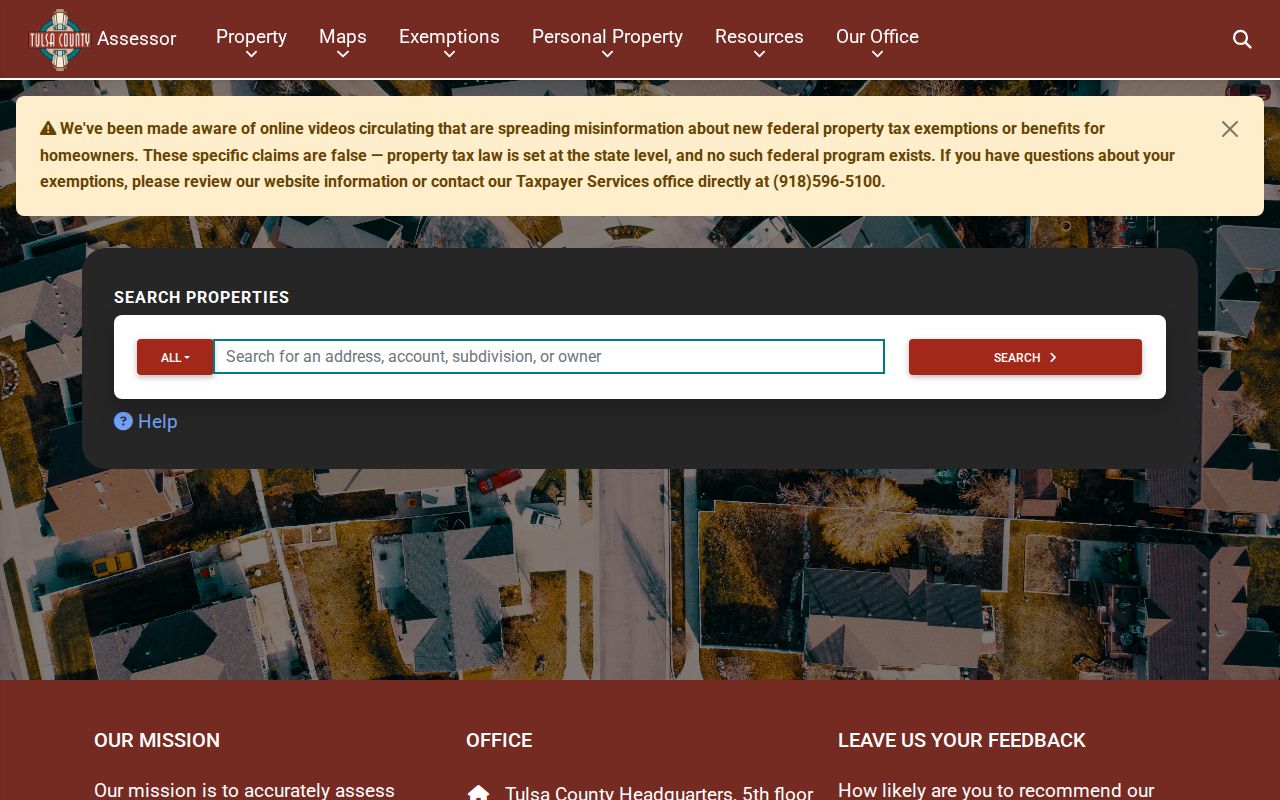
The form is the best starting point for a present parcel, then its displayed fields should be checked against the appropriate custodian record.
Tulsa Parcel Clues and Deed Records
A Tulsa property card typically distinguishes situs address from owner mailing address and also lists an account number, parcel ID, legal description, values, exemptions, and a Sales/Documents panel. That panel can show a sale date, grantor, grantee, sale price, deed type, and document number. A grantor transfers an interest; a grantee receives it. Those labels are the bridge from assessment data to the County Clerk’s recorded-instrument trail. They do not prove who presently occupies a house.
- Parcel
- A tax-accounted piece of land, identified by the Assessor’s parcel and account fields.
- Situs address
- The physical property address, distinct from the owner’s correspondence address.
- Legal description
- The land locator, often using subdivision, lot, block, or section-township-range terms.
- Index
- A finding aid that points to a record. It is not necessarily the record image or a title conclusion.
The Acclaim parcel screen accepts a parcel number, optional document type, and a recording-date range. County materials describe its land-record access as fee-based and registered. The name index begins in 1928, while legal-description coverage begins in 1987. Older work can require the Historical Camera path, tract or plat material, a call to land records, or a focused request.
Use the Assessor and Clerk routes as a handoff, not as interchangeable databases. The Assessor’s public page supplies present assessment context and the document pointers that make the next search more precise. Acclaim is the recorded-land route, but its account requirement and coverage split mean that an absent online result may call for a historical product, counter assistance, or a targeted request. A source date, document number, and legal description make that fallback useful.
| Tulsa record route | Best starting question | Practical boundary |
|---|---|---|
| Assessor Property Search | Which current parcel, address, owner field, and sales pointer match this search? | Free assessment information, not a title opinion or occupancy finding. |
| County Clerk Acclaim | Which recorded instrument matches a preserved party, parcel, date, or document number? | Registered fee access with separate historical paths and documented coverage differences. |
The County Clerk parcel index illustrates the parcel, document-type, and date controls.
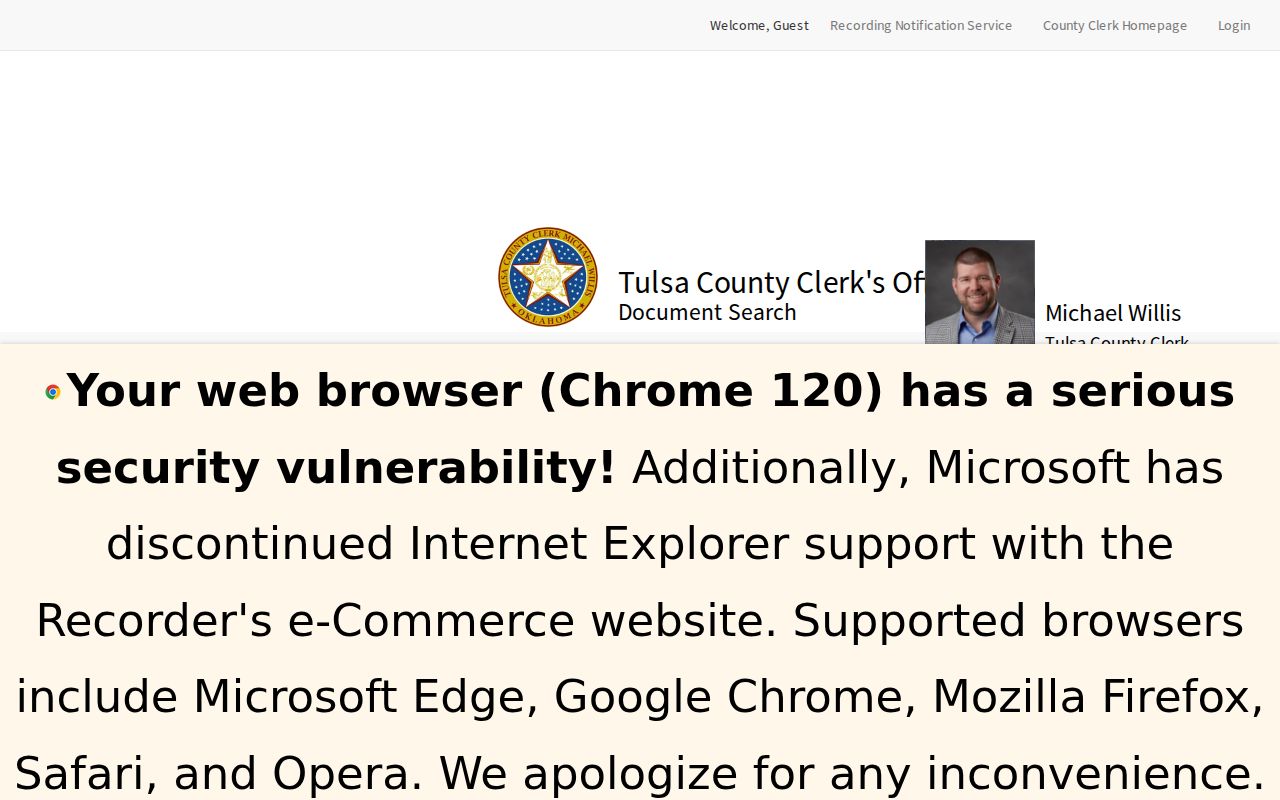
Keep the document number and recording date shown by the Assessor while moving to the Clerk’s system, because the present address alone is not a complete land-history key.
Tulsa Voter Checks Stay Individual
Oklahoma’s OK Voter Portal is an individual verification service. It requires last name, first name, and date of birth as they appear on registration. It is not a by-street or browseable residents directory. A mismatch can arise from a name or date issue, a county mismatch, a record that is not public, or a privacy protection. Tulsa County renumbered every precinct after the 2020 census, with the new lines effective June 28, 2022, so older precinct paperwork must be checked against current district information.
Use the official voter portal only for the individual verification path it provides.
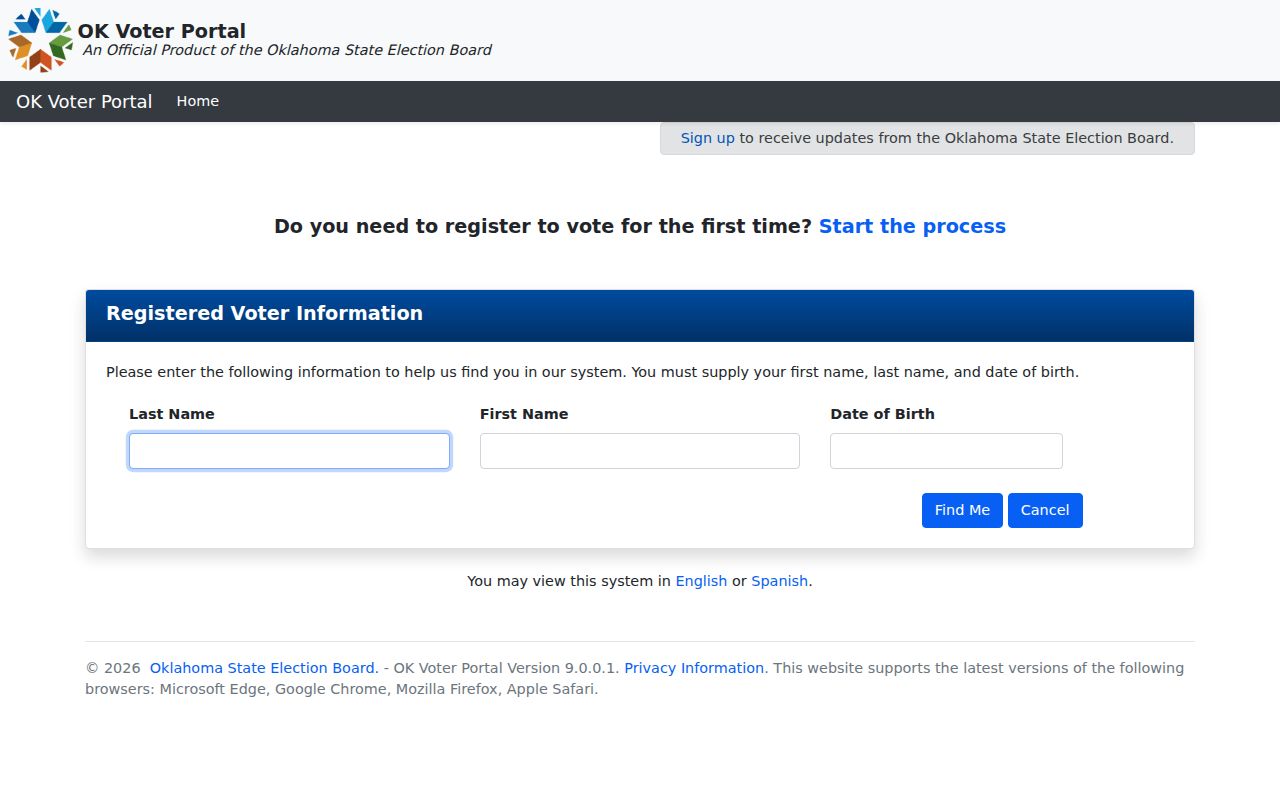
The required name-and-date fields illustrate why voter information must not be treated as a street roster.
Tulsa Court Dockets Need Context
The Oklahoma State Courts Network is the public starting point for Tulsa County District Court docket research. Narrow a name with Tulsa County, a case number, a case type, or an approximate filing range when known. Record the case number, court, caption, party roles, filing date, and public status. A docket title does not settle identity, kinship, or the full facts of a matter. Sealed, juvenile, adoption, expunged, and other confidential material is not a gap to fill by assumption.
Open the OSCN docket search when a case number or carefully checked name trail is relevant.
The online docket can point to the record, while the Tulsa County Court Clerk at the courthouse is the source for a filed copy or certification.
Current Tulsa Resident Directory Sources
Current Tulsa directory evidence is purpose-built rather than unified. The property roll identifies an assessed owner and addresses connected with that account. Recorded instruments identify parties to a transaction. Voter verification identifies an individual only after the required matching information is supplied. Court dockets identify public case parties, and permits connect a property to an activity or applicant. None of those records identifies every adult or renter at an address. Use the tool whose scope fits the question, then preserve its access limit in the notes.
| Source | Who It Lists | Keeper | Access |
|---|---|---|---|
| Assessor property roll | Assessed owners and parcel addresses | Tulsa County Assessor | Free public search |
| Recorded-instrument index | Grantors, grantees, and land documents | Tulsa County Clerk | Registered fee access; historical alternatives |
| OK Voter Portal | An individually matched registrant | Oklahoma State Election Board | Exact first name, last name, and date of birth |
| OSCN docket | Public court parties and case trail | State judiciary / Court Clerk | Free index; clerk handles files |
| City CSS permits | Address-linked permit activity | Tulsa Development Services | Guest type, address, and date search |
When the question is whether one name belongs with one address, the Tulsa resident lookup method focuses on cross-checking names, dates, and custodians rather than collecting unrelated search results.
Tulsa Vital Indexes and Certificates
The free OK2Explore index searches Oklahoma birth and death entries by event type, date, county, subject name, and sex. It adds birth records after 20 years and death records after 5 years. An index result only shows that a qualifying record is on file. It does not release a certificate. Oklahoma vital statistics remain confidential under 63 O.S. § 1-323 except for eligible people and other statutory routes. The Oklahoma State Department of Health administers online, phone, mail, and Tulsa will-call options for eligible certificate requests.
Review the OSDH vital-records instructions before treating an index result as a requestable record.
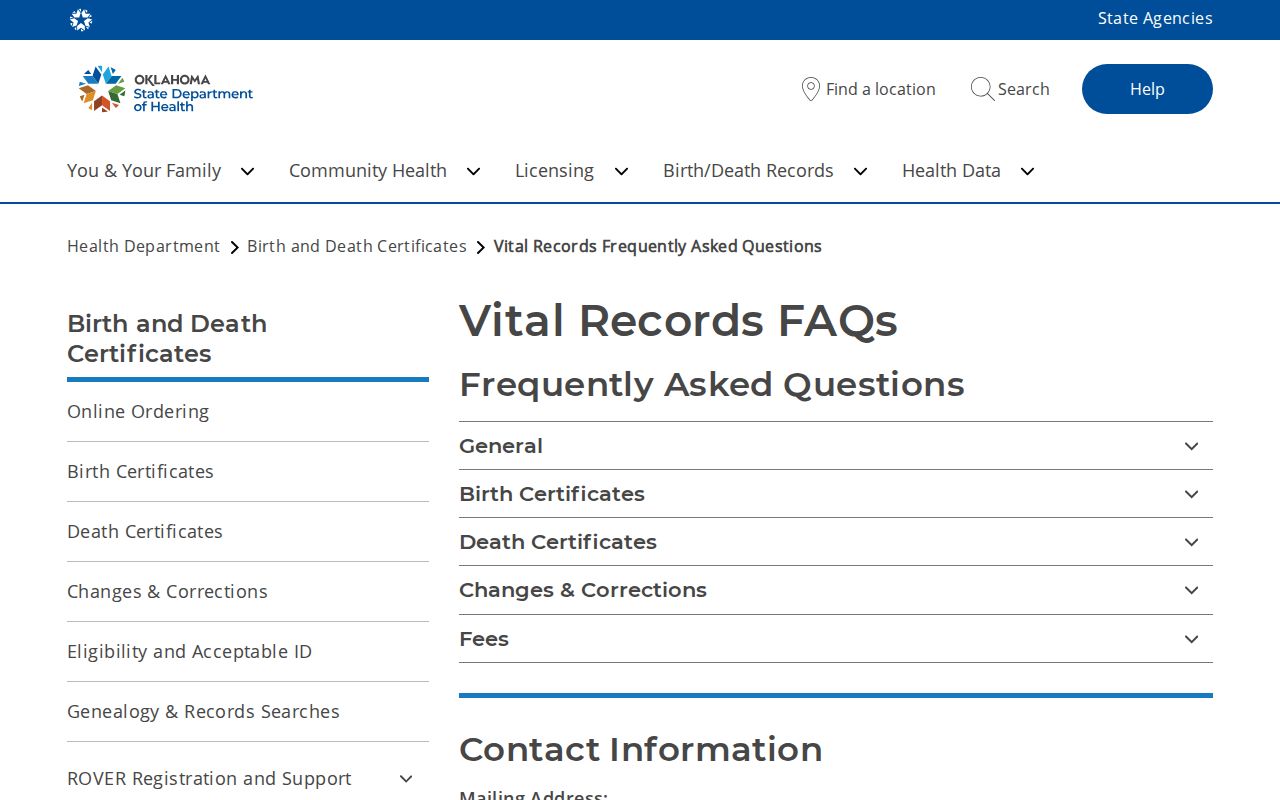
The state’s access information separates a searchable index from the documentation and eligibility required for a certificate.
Tulsa Records Requests Beyond Portals
When a non-confidential record is not online, Oklahoma’s Open Records Act, 51 O.S. §§ 24A.1 through 24A.34, calls for prompt, reasonable access during regular hours while allowing procedures that protect record integrity. A useful request names the office, record type, date range, subject or address, whether inspection or copying is wanted, and a way to receive a fee estimate. The County form allows supervised inspection and can require prepayment. Its listed reproduction prices include 25 cents for legal-size or smaller paper and one dollar per certified page.
Use the City of Tulsa open-records route for City-held material and the Tulsa County request form for a targeted county record.
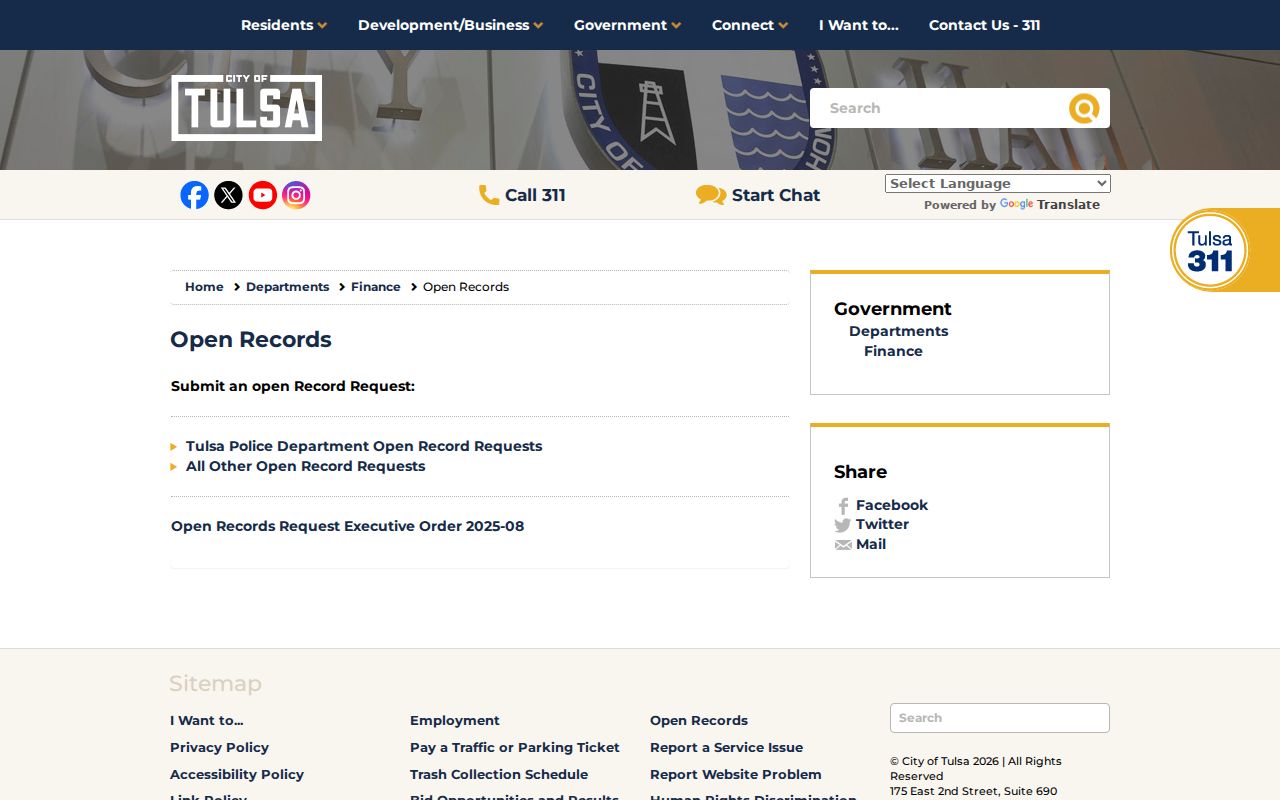
The City portal directs requesters to the appropriate route for City records rather than treating a portal search as the only access channel.
Use the County request page to review the County’s form and inspection information.
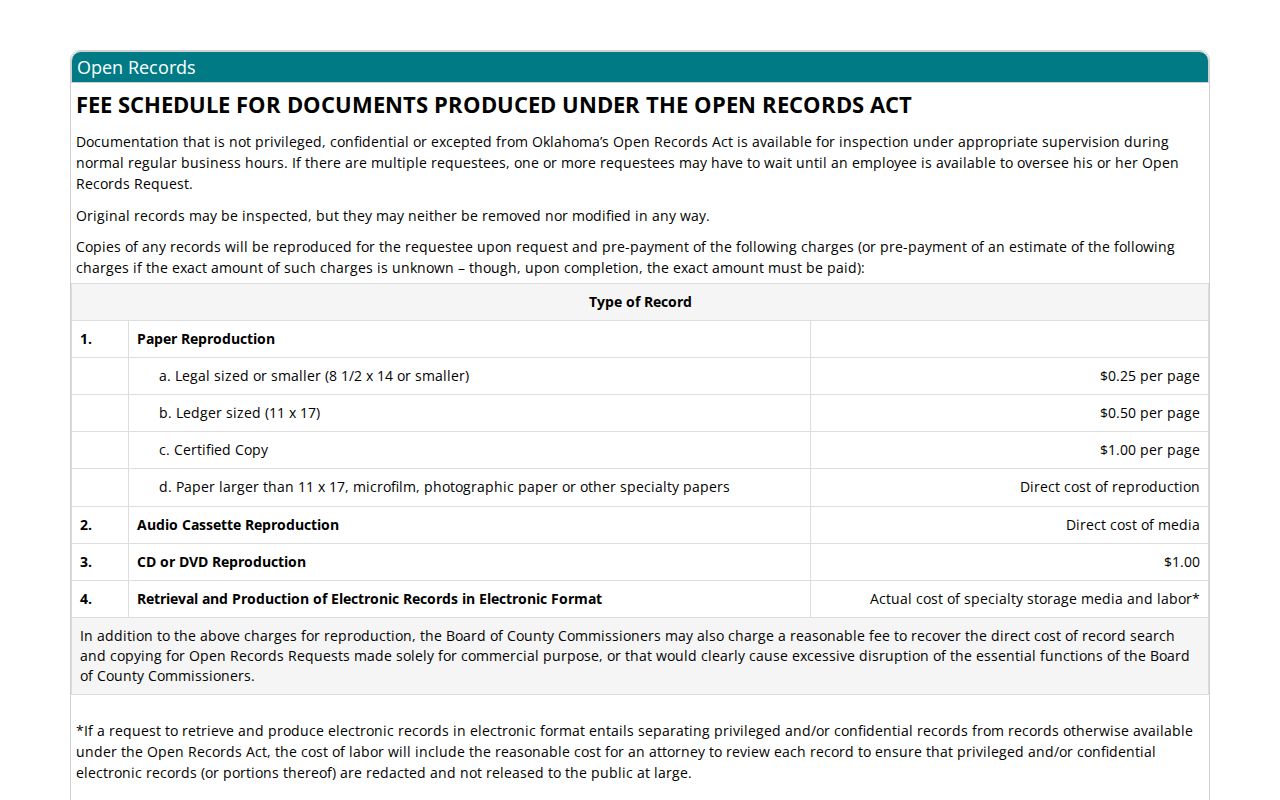
A focused request can bridge a documented online gap, but it cannot override a sealed file, a protected voter record, or a vital-record eligibility rule.
Tulsa Public-Safety Searches Have Limits
The Tulsa County Sheriff’s jail-information page directs users to a name search for a David L. Moss Criminal Justice Center inmate number. Oklahoma DOC offers a separate statewide offender lookup, and the state registry has a statutory name, location, or criteria search. These are narrow public-safety resources, not a Tulsa residents directory or a way to identify everyone at an address. Booking, charge, bond, status, and release information can change; an allegation is not a finding of guilt.
Open the Sheriff jail-information page only for its stated custody route.
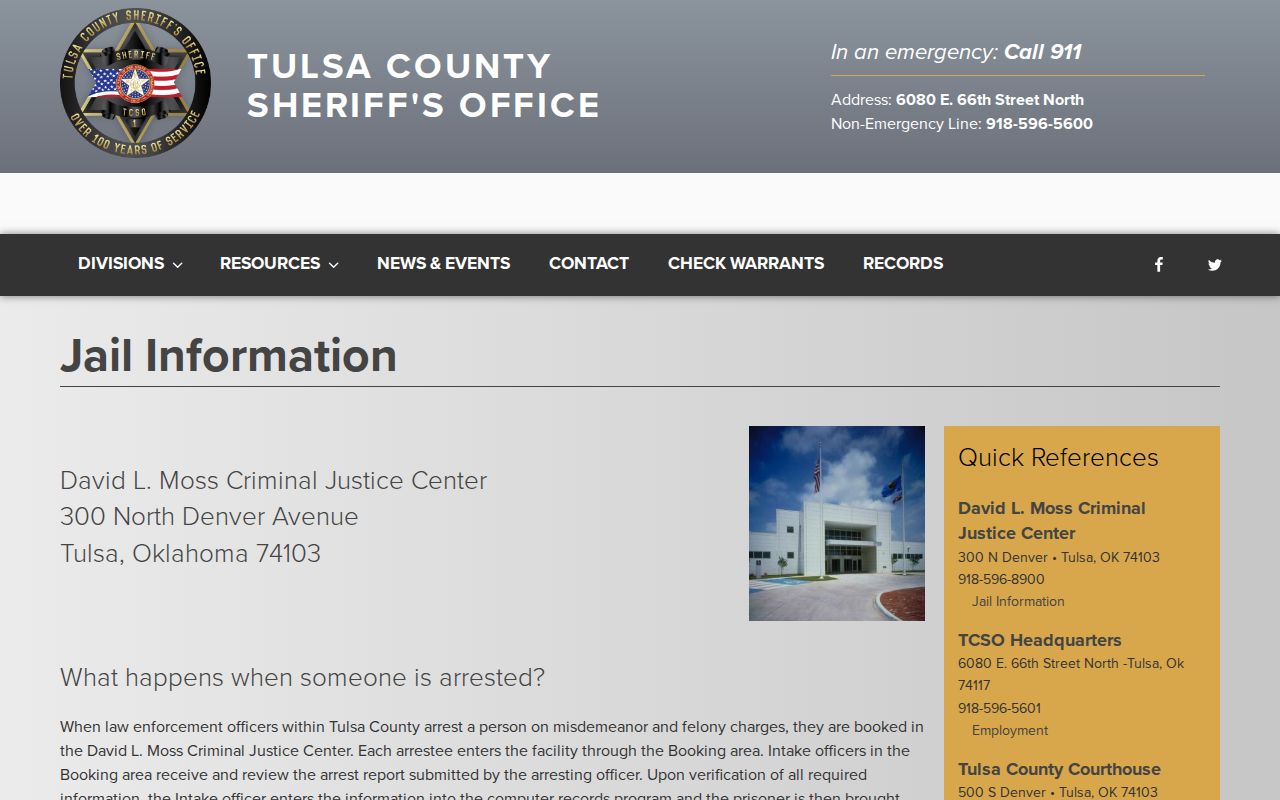
The local page connects a name search to a facility number, which should be verified with the facility when current custody matters.
The Oklahoma DOC information page explains the distinct statewide lookup and release-information limits.
DOC public data has stated exclusions, including protected release-date information except where a legitimate need exists.
The Oklahoma registry provides its own statutory search scope.
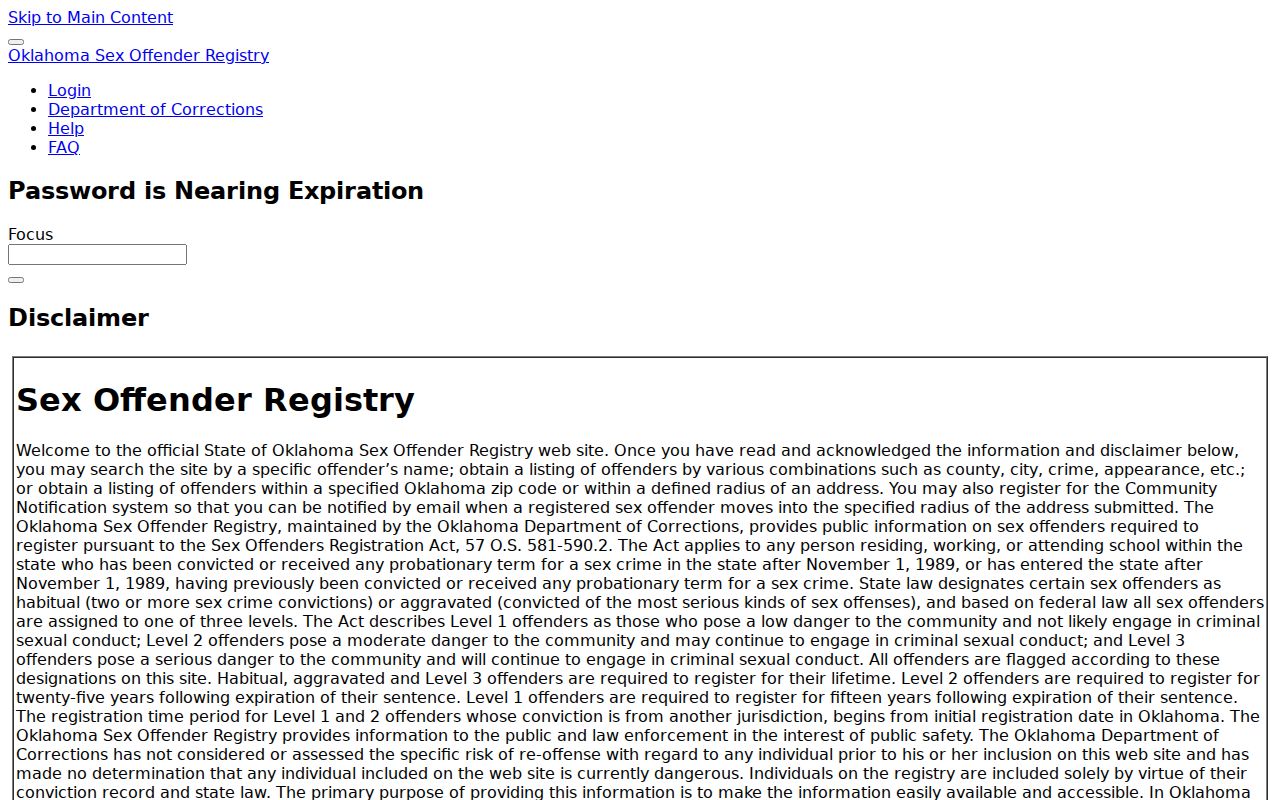
A registry profile cannot establish a complete household or replace direct verification with the responsible agency.
Tulsa Street History Affects Searches
Tulsa address research has a local trap. The original townsite used Main Street and the Frisco tracks as dividing lines, then later additions brought compass points and numbering changes. A 1908 resurvey for a new charter changed some original street names. The downtown system even produced an intersection of 11th Street East and 11th Street East. Before deciding that an early address disappeared, compare the period directory, a historical map, and the address wording used at the time.
That comparison matters most when a parcel or directory search fails around early downtown, Greenwood, west Tulsa, or later expansion areas. The present address may not be the historical search key.
Note: Postal labels, street names, and legal land descriptions solve different Tulsa record questions and should never be swapped without checking the source date.
Tulsa ZIPs Can Cross Jurisdictions
Tulsa city limits reach into portions of Creek, Osage, Rogers, and Wagoner counties, so the situs county controls a property record outside Tulsa County. ZIP Codes are mail-delivery areas, not city borders. The City’s five-region map places 74131 in an overlap area and flags edge ZIPs such as 74132 for an exact address and jurisdiction check. Use the USPS address lookup and the Assessor or City GIS result before deciding which recorder, assessor, or court path applies.
A ZIP narrows a mailing question, then the address and parcel details take over. The Tulsa ZIP code directory keeps that postal geography separate from street-level record work.
Historical Tulsa Resident Directory Collections
Tulsa City-County Library holds Tulsa city directories from 1909 to the present, with gaps in 1945, 1949, 1952, 1962, and 1998. Reverse street searching begins in 1912. Telephone directories run from 1931, and Cross Reference Directories have organized telephone numbers and street addresses from 1944. The public digital collection includes 1910, 1920, 1921, and 1922 volumes. These are dated publications, so they can place a printed name or address in a year without proving legal residence or current occupancy.
The full Tulsa city directory collection details the books, abbreviations, library access, and ways to trace a household across years. Central Library Research Center access is appointment-based, while the Hardesty Genealogy Resource Center adds in-library local collections and research help.
Lawful use. Use Tulsa records for family history, reconnecting, property research, civic questions, or other lawful personal purposes. Do not use record details to stalk, harass, or harm anyone.